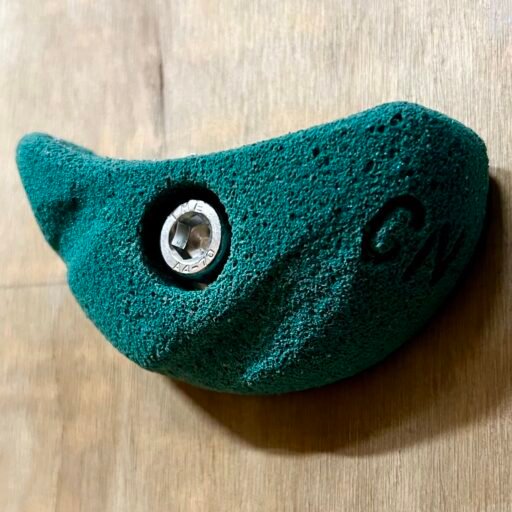
Wood hardness
Wood hardness is measured using the Janka hardness test which measures how well a species of wood resists denting, wear, and everyday damage. It can be in lbf or Newtons. Harder woods are more but also harder to cut and shape.
Harder woods are better for making climbing holds. Woods with a Janka hardness below about 1,000 lbf tend to compress under repeated, aggressive pulling—especially on small crimps.
Grain Structure
Open‑grained woods have visible pores that trap chalk and skin oils, making them harder to clean and more prone to uneven wear. In contrast, close‑grained woods polish evenly and can be brushed clean without much effort. Their fine, uniform grain also provides better splinter resistance,
Source
To keep costs down consider using scrap lumber or off cuts. Even a few old nail holes won’t affect the perfromance of the hold
Wood Selection
Most professional wooden holds are made from Beech or Hard Maple. In practice for a home climbing wall / board softer woods can still be perfectly acceptable especially for larger, more open shapes such as jugs, slopers, and thick pinches where the forces are distributed across a larger surface.
For example native New Zealand Rimu framing timber removed from a house during a renovation which has a janka hardness of 800 to 900 lbf, a closed grain, cost nothing, looks great and performs fine.