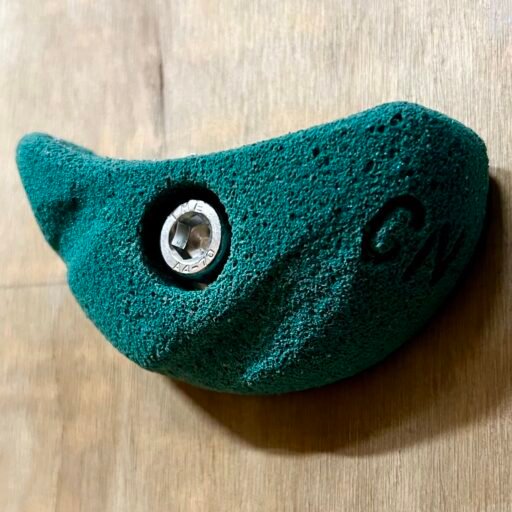
Different materials required different methods. Before making you holds you will need to decide which method(s) you would like to use. Below is discussion on the methods and when you might use them. If you are not sure a mixture of holds produced using different methods creates a diverse and interesting set of holds, lets you enjoy the learning the different processes and the learnings form one technique help you with another. A good progression to get started is to:
- Buy some commercial holds – get a feel for what works on your wall and what holds you want more off
- Make some wooden holds – low cost of entry, lets you check that you have the time and enjoy the process of making holds
- Make some plywood volumes if your wall is feeling a bit one dimensional
- Cast some PU Holds – the learnings to date will help with imagining the final foam shapes and ensure that the silicon moulds you create will be shapes you want to re-use
| Method | What’s Involved | Pro’s | Con’s | When to use |
| Wooden Climbing Holds | – Selecting a block of timer – Drilling holes for screw or bolt attachment – Cutting a rough shaping using a saw – Removing material to shape the hold – Sanding the finished shape – Optional finishing with varnish or textured paint | – Most people already have the tools required – Timber can be cheap – Holds are easy on your skin – Provide consistent friction (don’t get greasy or slick like worn plastic – Wooden holds are a prototype as you build so you can modify them if not quite right – Every hold is unique | – Time consuming for a large volume of holds – One level of friction / not easy to texture – Certain shapes are hard to create | – You need more holds for your wall at the lowest cost possible – Great place to start and learn about shapes – You enjoy working with wood |
| Polyurethane Holds | – Creating a template from foam – Pouring a silicon mould – Mixing Polyurethane and casting holds | – This is the construction method that most manufacturers use – Once you have the moulds you can make large quantities of holds quickly – Easy to make different textures and complex shapes | – Silicon is expensive – The holds aren’t recyclable so eventually contribute to plastic waste – No cost savings for small numbers of holds | – Want to create holds like what you would find in a commercial climbing gym – Want to create a large number of holds – Want to experiment with a variety of textures and finishes |
| Plywood Macros | – Cutting shapes from Plywood – Laminating plywood sheets – Shaping and sanding – Optional – Painting inc textured pain | – Cheaper than purchasing commercially made volumes – Can use off cuts if you have constructed a home wall using plywood | – Commercial Macros are typically made from fibreglass reinforced plastic (which is not easy to replicate at home) | – Fancy trying something different |
| Plywood Volumes | – Cutting shapes and angles from sheets of plywood – Drilling holes for and installing t-nuts – Gluing and screwing plywood shapes together – Optional – Sanding and Painting with textured paint | – Allows existing holds to be used differently e.g. On a 45 degree wall it can enable a smaller hold to become usable – Cheaper than purchasing commercially made volumes – Can use off cuts if you have constructed a home wall using plywood | – Needs a means of cutting accurate angles – Can dominate space if too large / your home wall is in a confined area – Many board climbers intentionally choose not to have volumes on their wall | – Want to create a more interesting base wall – Complements your wooden and Polyurethane Holds |
You can also make holds from pieces of stone and 3D printing. These techniques are not currently covered on Climbing Hold Maker.